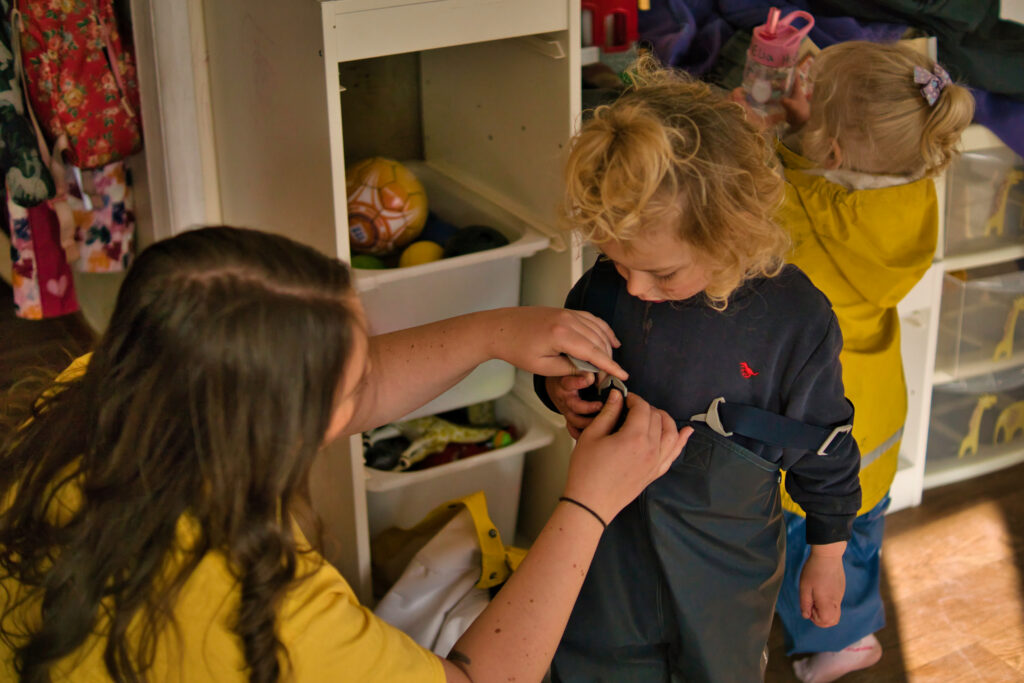
Dressing themselves
Being able to put their coat on and zip it up independently, take their jumper and shoes on and off will really help for outdoor play. When it comes to PE, children will be expected to undress and dress themselves. During the summer term at the Opportunity Centre, we take the children to the school hall for PE and we will be working on changing into PE kit.
Toileting & personal care
Another part of being independent at school is being able to use the toilet, including washing and drying their hands. Reception class usually have a toilet nearby, but children are expected to use it on their own. If your child is not confident in toileting on their own then they may avoid visiting the loo until it is too late. To build confidence, encourage your child to take toilet trips on their own. Remember to include hand washing as part of the visit. It will help if your child can blow their nose too. When children start school, they are exposed to lots of bugs. Being able to wipe their nose and put their tissue in the bin will help stop colds spreading. Try buying your child their own small pack of tissues to keep in their pocket.
Eating independently
If your child stays for lunch, they will be used to eating independently. While the lunchtime supervisors at school are very helpful, encourage your child to practice opening packets and containers. Encourage them to help choose and make their lunches. If they will be having hot dinners, practice using a knife, fork and spoon.
Recognising their name
If your child can recognise their name, they will be able to find their peg, their drawer in the classroom and find their jumper if it gets misplaced. From the summer term onwards at the Opportunity Centre, we encourage our Rising 3s group to recognise their name, starting by taking away the pictures of the children from the morning board and replacing them with their names. Starting school can make even the most confident child feel a little lost. If they can locate and identify their things, then they will feel a little more in control. Show your child their name written down and put it around their room or on their belongings. This is a great way to help them recognise their name in preparation for school.
Using manners, sharing & taking turns
‘Please’ and ‘thank you’ are very important. Use the words you would like to hear your children using. Encourage your child to share, use the phrases such as “my turn please” and “let’s share”.
Communicating with others, listening & carrying out instructions
Being able to interact appropriately with other children and adults is a key skill at school and this is supported by good communication skills. The school day is full of instructions. Your child will be asked to put their coat on a peg, get their lunchbox off the trolley and sit crossed legged on the carpet for circle time. Get your child used to carrying out simple tasks such as fetching their shoes, getting something from the cupboard or finding their water bottle.
These are all things that you are probably helping your child to do every day, but as school approaches try taking a step back. If you help a little bit less you will soon find your child enjoying being able to do all these things by themselves. Don’t worry if you feel overwhelmed, we will be doing lots of work with our Rising 3s in preparation for September and you can help by using everyday experiences at home as opportunities for learning. Teaching staff will always be on hand to help, but children feel a real sense of achievement when they accomplish things by themselves.